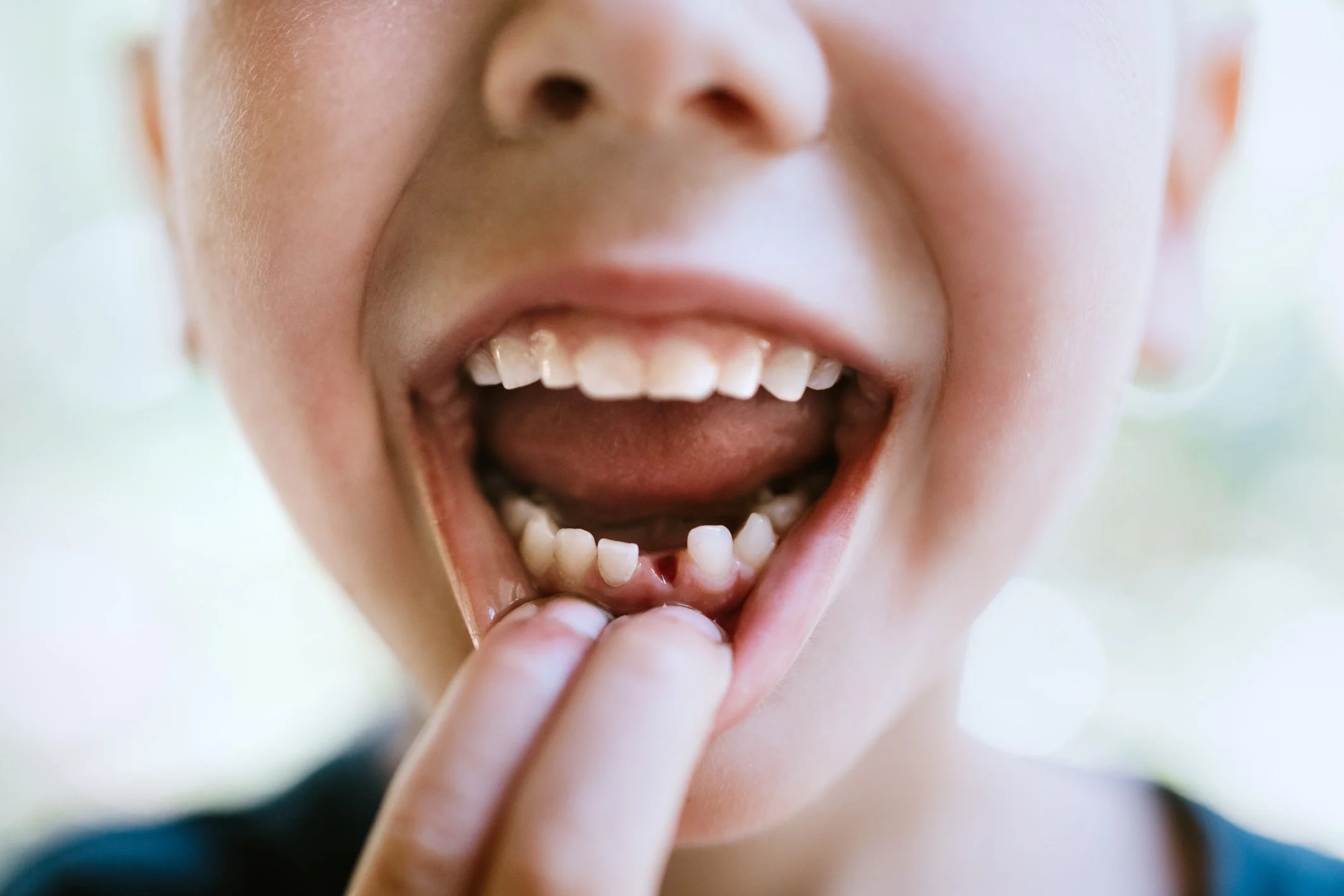
Have you ever noticed your child’s new adult tooth coming in while the baby tooth is still firmly in place? Or perhaps your child is getting older, but some of their baby teeth just don’t seem ready to leave. If so, you’re not alone!
Losing baby teeth is a big childhood milestone, but every child follows a slightly different timeline. Sometimes, a baby tooth simply needs more time to loosen. In other cases, a tooth that stays in place longer than expected may signal that something deserves a closer look.
For parents looking for kids dentistry in Paradise Valley, AZ, understanding why baby teeth sometimes stick around can help you recognize what’s normal, when to schedule a dental visit, and how to support your child’s developing smile.
Let’s explore why baby teeth may not fall out on schedule and what parents can do to help.
When Should Baby Teeth Fall Out?
Most children begin losing their baby teeth around age six. The two lower front teeth are often the first to go, followed by the upper front teeth. Over the next several years, more baby teeth gradually make way for permanent teeth.
The process happens because the roots of baby teeth slowly dissolve as the permanent teeth develop and move toward the surface. Eventually, the baby tooth becomes loose enough to fall out naturally.
Children typically continue losing baby teeth until around age 12, although the timing varies depending on the tooth and the individual child.
It’s also important to remember that the first permanent molars usually erupt behind the baby teeth around age six. They do not replace a baby tooth, so parents may not notice them right away.
A little variation is normal. However, if a tooth seems unusually delayed or your child’s teeth are erupting in an unexpected pattern, a pediatric dental evaluation can help determine whether everything is progressing as it should.
Why Won’t My Child’s Baby Tooth Fall Out?
There isn’t one single explanation for a baby tooth that refuses to budge. Here are some possible reasons.
1. The Permanent Tooth Is Taking Its Time
Sometimes, the permanent tooth underneath a baby tooth develops or erupts later than expected. Since the permanent tooth normally helps trigger the process that loosens the baby tooth, a delay can mean the primary tooth stays in place longer.
Children develop at different rates, so a later-than-average tooth eruption does not automatically indicate a problem.
A pediatric dentist can evaluate the tooth’s position and development and determine whether monitoring is all that’s needed.
2. The Permanent Tooth Is Growing in Behind the Baby Tooth
This is sometimes called “shark teeth,” and it can be surprising to see!
Instead of appearing directly beneath a baby tooth, a permanent tooth may erupt behind it, often near the lower front teeth. The baby tooth may still be in place because its root has not dissolved enough to make it loose.
In many cases, the baby tooth eventually falls out naturally, allowing the permanent tooth to move toward its expected position.
However, if the baby tooth remains firmly in place, the permanent tooth becomes increasingly crowded, or you notice other unusual changes, contact your child’s dentist. The dentist can determine whether the tooth should be monitored or whether intervention may be appropriate.
3. There May Not Be a Permanent Tooth Waiting Underneath
Occasionally, a permanent tooth never develops. This is known as a congenitally missing permanent tooth.
When there is no permanent successor to replace a baby tooth, the primary tooth may remain in place longer than usual.
A retained baby tooth is not necessarily a problem that needs immediate treatment. Depending on its condition, position, and the surrounding teeth, a dentist may recommend keeping it for as long as it remains healthy and functional.
If your child has a baby tooth that seems unusually persistent, a dental examination—and sometimes an X-ray—can help establish whether a permanent tooth is developing underneath.
4. The Baby Tooth May Be Ankylosed
Here’s a less familiar dental term: ankylosis.
An ankylosed baby tooth is one that has become fused to the surrounding bone, preventing it from moving normally as the jaw grows. Instead of falling out on schedule, it may remain in place while the neighboring teeth and gums continue developing.
Parents may notice that the affected tooth looks shorter than the teeth next to it, almost as if it is sinking into the gumline.
Ankylosis requires professional evaluation because it can sometimes interfere with the eruption of the permanent tooth or the development of the surrounding bite. Depending on the situation, the dentist may recommend monitoring, extraction, or additional treatment.
5. The Permanent Tooth May Be Impacted or Erupting in an Unusual Position
Sometimes, a permanent tooth cannot follow its expected eruption path. It may be angled incorrectly, blocked by another tooth, or unable to emerge normally.
In these situations, the baby tooth may remain in place longer than expected.
A pediatric dentist can assess the eruption pattern and, when needed, use dental imaging to examine what is happening beneath the gums. Depending on the findings, an orthodontic consultation may be recommended.
The important thing is not to assume that every retained baby tooth needs to be pulled. The right approach depends on the cause.
Can Keeping Baby Teeth Too Long Affect a Child’s Smile?
Baby teeth are more than temporary placeholders. They help children chew, speak, and maintain space for their developing permanent teeth.
When a baby tooth remains longer than expected, the effects depend on why it is still there and how it relates to the surrounding teeth.
Potential concerns include:
Crowding or misalignment: A permanent tooth may erupt in an unusual position or have limited space.
Changes in the bite: A tooth that sits too high or too low relative to neighboring teeth may affect how the upper and lower teeth meet.
Delayed eruption: A permanent tooth may be blocked or follow an abnormal eruption path.
Damage or decay: A retained baby tooth can still develop cavities or gum problems, just like any other tooth.
Not every retained baby tooth causes these issues. Some remain healthy and functional for years. Regular dental checkups help determine whether a tooth can safely stay in place or whether treatment would be beneficial.
What Should Parents Do If a Baby Tooth Won’t Fall Out?
If your child has a baby tooth that seems to be staying longer than expected, here are a few practical steps to follow.
Watch for Changes
Notice whether the tooth is becoming loose, whether a permanent tooth is appearing behind or beside it, and whether the surrounding gums look healthy.
You don’t need to inspect your child’s mouth constantly. Simply mention any unusual changes during routine brushing or dental visits.
Avoid Forcing the Tooth Out
If the tooth is loose, your child can gently wiggle it with a clean finger or their tongue.
However, avoid pulling a tooth that is still firmly attached or trying to remove it with string or other home remedies. Forcing it out can cause unnecessary pain or injury.
If the tooth is not loosening or appears to be blocking a permanent tooth, let your child’s dentist assess it.
Keep Brushing and Flossing
A retained baby tooth still needs daily care. Encourage your child to brush twice a day with fluoride toothpaste and floss wherever the teeth touch.
Pay particular attention to crowded areas, where food and plaque may be more difficult to remove.
Schedule a Dental Evaluation
If a baby tooth remains firmly in place while a permanent tooth erupts, appears to be sinking below the neighboring teeth, or is accompanied by pain or swelling, arrange a dental evaluation.
A pediatric dentist can examine the tooth, review your child’s dental development, and determine whether observation, imaging, or treatment is appropriate.
If your child has significant pain, facial swelling, fever, or difficulty swallowing, seek prompt professional care.
How Does a Pediatric Dentist Treat Retained Baby Teeth?
Treatment depends on the underlying cause. There is no single solution for every child.
After examining the mouth and reviewing the child’s dental history, a pediatric dentist may recommend one of the following approaches:
Monitoring: If the tooth is healthy and the permanent tooth is developing normally, the dentist may simply track its progress at regular visits.
Removing the baby tooth: If it is obstructing a permanent tooth or causing other concerns, extraction may be recommended.
Dental imaging: An X-ray may help determine whether a permanent tooth is present, where it is positioned, and whether anything is interfering with its eruption.
Orthodontic evaluation: If crowding, an impacted tooth, or a bite problem is involved, the dentist may recommend an orthodontist to assess the child’s developing smile.
The goal is to protect the health of the existing teeth while giving permanent teeth the best opportunity to develop and erupt appropriately.
Frequently Asked Questions About Baby Teeth That Won’t Fall Out
At what age should I worry if my child still has baby teeth?
Children usually begin losing baby teeth around age six and continue through approximately age 12. However, timing varies by tooth and by child. If a tooth seems significantly delayed, a permanent tooth is erupting in an unusual position, or you have concerns about your child’s bite, ask a pediatric dentist for an evaluation.
Is it normal for a permanent tooth to grow behind a baby tooth?
Yes, this can happen, particularly with the lower front teeth. Often, the baby tooth eventually falls out and the permanent tooth moves toward its expected position. If the baby tooth remains firmly attached or the new tooth appears increasingly crowded, your dentist can determine whether treatment is needed.
Will a retained baby tooth need to be extracted?
Not always. Some baby teeth can remain healthy and functional for an extended period, especially when no permanent successor exists. Extraction may be appropriate when a tooth interferes with eruption, contributes to bite problems, or has other dental complications. The decision should be based on an individual examination.
Can a baby tooth stay in place if the permanent tooth is missing?
Yes. When a permanent successor never develops, a baby tooth may remain in place well beyond the usual age of tooth loss. A dentist can evaluate its health and position and discuss how to preserve it for as long as possible, if appropriate.
Can I pull out my child’s baby tooth at home?
Only consider removing a tooth that is already very loose and comes out easily. Never force a firmly attached tooth out. If you are unsure whether it is ready, ask your child’s dentist.
Helping Your Child’s Smile Develop on the Right Track
A baby tooth that refuses to fall out can be puzzling, but it doesn’t automatically mean something is wrong. Sometimes the tooth simply needs more time. In other cases, it may be a clue about how the permanent teeth are developing.
The best approach is to maintain good oral hygiene, avoid forcing a tooth out, and keep up with regular dental checkups. These visits give your child’s dentist an opportunity to monitor tooth eruption, evaluate the bite, and recommend next steps when needed.
At Dr. Sugar, Children’s Dentistry, we help families in Paradise Valley, AZ understand the changes that come with growing smiles. If you’ve noticed a baby tooth that isn’t falling out, a permanent tooth appearing in an unusual position, or another concern about your child’s dental development, our team can help you understand what may be happening and whether further evaluation is needed.
A little guidance at the right time can help parents make informed decisions and support healthy smiles as their children grow.
Ready to learn more about your child’s developing smile? Contact Dr. Sugar, Children’s Dentistry to schedule a visit and discuss your child’s dental development.
