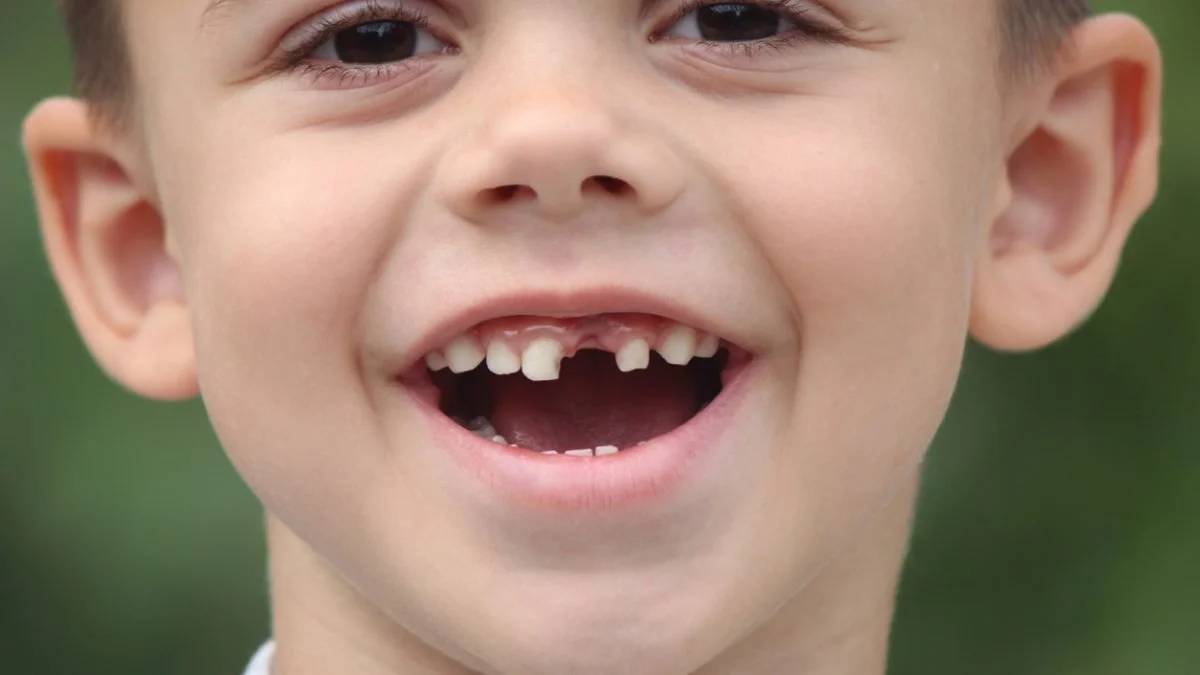
For many children, losing a first baby tooth is a big deal. It means a visit from the Tooth Fairy, a little excitement, and one more milestone on the way to growing up. But what happens when that tooth just won't come out?
Maybe your child's friends are already showing off their toothless smiles, while your little one still has every baby tooth in place. Or perhaps a permanent tooth has started appearing behind a baby tooth that doesn't seem ready to move.
Should you be concerned?
The good news is that children's teeth don't all follow exactly the same schedule. However, understanding how baby teeth are supposed to fall out can help parents recognize when it's time for a closer look.
At Doctor Sugar, we believe that understanding your child's dental development is an important part of maintaining a healthy, confident smile.
When Should Children Start Losing Their Baby Teeth?
Most children begin losing their baby teeth around age 6. The process usually starts with the two lower front teeth, followed by the upper front teeth.
However, the timing varies from child to child. Some children start a little earlier, while others may not lose their first tooth until closer to age 7.
Here's a general guide to when baby teeth typically fall out:
Baby teethTypical age rangeLower and upper front teeth (central incisors)6–8 yearsSide front teeth (lateral incisors)7–9 yearsFirst baby molars9–12 yearsCanines (pointed teeth)9–12 yearsSecond baby molars10–13 years
These are approximate ranges, not strict deadlines. The order and timing can vary, and a child's dentist can help determine whether their development is progressing normally.
Why Won't My Child's Baby Tooth Fall Out?
Baby teeth don't simply fall out because a child reaches a certain birthday. The process happens as permanent teeth develop underneath them.
As a permanent tooth moves toward the surface, it gradually causes the baby tooth's roots to dissolve. This process, called root resorption, makes the baby tooth loose until it eventually falls out.
But sometimes, this process doesn't happen as expected. Here are a few possible explanations:
1. Your Child Is Simply a Late Bloomer
Just as children grow at different rates, their teeth develop on different timelines, too. A child who still has a few baby teeth while classmates are losing theirs may simply be experiencing normal variation.
If there are no other concerns, your pediatric dentist can monitor the situation during routine dental checkups.
2. The Permanent Tooth Is Taking a Different Route
Sometimes, a permanent tooth doesn't emerge directly underneath the baby tooth. Instead, it may grow at an angle or appear behind it.
This is commonly known as "shark teeth" because children can temporarily have two rows of teeth. It often happens with the lower front teeth.
In many cases, the baby tooth eventually becomes loose and falls out. However, if it remains firmly in place or the permanent tooth seems to be growing out of position, a dental evaluation can help determine whether any treatment is needed.
3. The Permanent Tooth May Be Missing or Delayed
In some children, a permanent tooth develops later than expected or may be congenitally missing, meaning it never formed.
When there is no permanent tooth underneath a baby tooth, the baby tooth may remain in place longer than usual.
This doesn't automatically mean something is wrong, but it's important to identify what's happening so the dentist can plan for your child's long-term dental health.
4. The Baby Tooth Isn't Moving as It Should
Occasionally, a baby tooth becomes ankylosed. This means it becomes abnormally fused to the surrounding bone and doesn't move normally as the child grows.
An ankylosed tooth may look lower than the neighboring teeth or appear as though it's sinking into the gumline.
A pediatric dentist can evaluate the tooth and determine whether monitoring or treatment is appropriate.
What If a Permanent Tooth Comes In Before the Baby Tooth Falls Out?
This is one of the most common things that surprises parents.
Imagine looking inside your child's mouth and noticing a brand-new tooth growing behind a baby tooth that is still firmly in place. It may look unusual, but it isn't necessarily an emergency.
In many cases, the baby tooth will eventually loosen and fall out, allowing the permanent tooth to move into a better position.
However, if the baby tooth doesn't become loose, or if the permanent tooth continues to emerge in an unusual position, schedule an evaluation with your pediatric dentist.
Avoid trying to force the baby tooth out at home. Pulling a tooth before it's ready can cause unnecessary pain or injury.
Why Baby Teeth Still Matter Even When They're About to Fall Out
It can be tempting to think that baby teeth aren't very important because they're temporary. But they play several essential roles in your child's development.
Baby teeth help children:
Chew food comfortably and maintain healthy eating habits.
Develop clear speech and pronunciation.
Maintain space for permanent teeth to erupt.
Support the development of the jaw and bite.
Losing a baby tooth too early because of decay, infection, or an accident can sometimes cause neighboring teeth to shift into the open space. This may affect the room available for the permanent tooth.
That's why preventive dental care remains important throughout childhood, even when your child is already losing teeth.
When Should Parents Visit a Pediatric Dentist?
Every child's dental development is different, so there isn't one exact age when every baby tooth should fall out.
Still, consider scheduling a dental evaluation if you notice:
Your child hasn't lost any baby teeth by around age 7.
A permanent tooth is erupting behind or beside a baby tooth that isn't becoming loose.
One baby tooth remains while the corresponding tooth on the other side has already fallen out, especially if the difference persists.
A baby tooth looks unusually low compared with neighboring teeth.
Your child experiences pain, swelling, or difficulty chewing.
A baby tooth falls out much earlier than expected because of an injury or severe decay.
Your pediatric dentist may examine your child's teeth and, when appropriate, recommend dental X-rays to check the position and development of permanent teeth.
Early evaluation can help identify potential concerns and determine whether simple monitoring or treatment is the best approach.
How to Support Healthy Dental Development at Home
While you can't control exactly when your child's baby teeth fall out, you can help protect their smile as permanent teeth begin to arrive.
A few simple habits make a big difference:
Encourage brushing twice a day. Use fluoride toothpaste and make sure your child brushes all surfaces of their teeth, including around loose teeth and newly erupted permanent teeth.
Don't forget to floss. Food and plaque can collect between teeth, especially as children's smiles change.
Choose tooth-friendly snacks. Offer fruits, vegetables, cheese, yogurt, and other nutritious options while limiting frequent sugary snacks and drinks.
Avoid forcing loose teeth. Let a baby tooth fall out naturally when it's ready. Gentle wiggling is fine if the tooth is already loose, but never pull or twist a firmly attached tooth.
Keep regular dental appointments. Routine checkups allow your dentist to monitor tooth eruption, spacing, and bite development as your child grows.
Growing Smiles Don't Always Follow a Perfect Schedule!
A missing tooth can be exciting, but a tooth that refuses to fall out can leave parents with plenty of questions. The important thing to remember is that every child's smile develops at its own pace.
Most differences in tooth-loss timing are simply part of growing up. Still, keeping an eye on your child's dental milestones and attending regular checkups can help identify concerns before they become more complicated.
At Doctor Sugar, Children's Dentistry, we're passionate about making dental visits comfortable, positive, and educational for children and their families.
If you have questions about your child's baby teeth, delayed tooth loss, or permanent teeth coming in, our team is here to help.
Looking for a trusted pediatric dentist in Paradise Valley, AZ? Contact Doctor Sugar to schedule an appointment and help your child enjoy a healthy smile at every stage of development!
