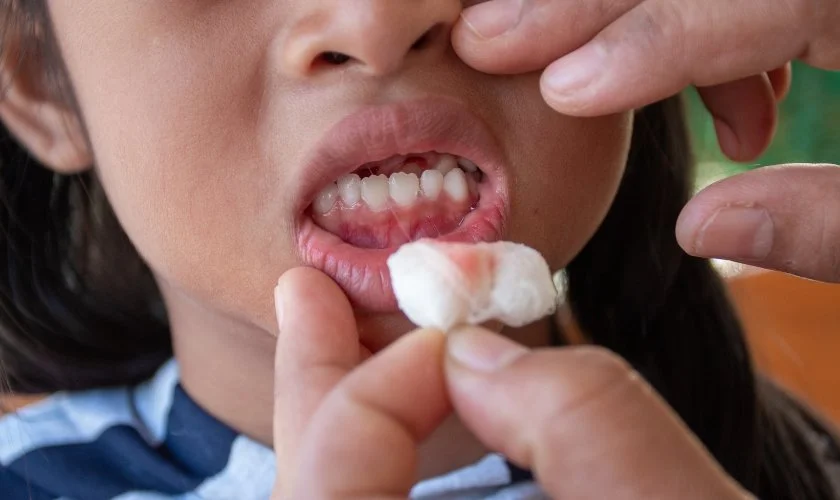
Seeing a little pink or red in your child's toothpaste after brushing can be surprising. Is it normal? Should you be worried? Or is it a sign that something isn't quite right with their oral health?
Bleeding gums in children are more common than many parents realize, but they shouldn't be ignored. Healthy gums are an essential part of a healthy smile, and understanding what causes gum bleeding can help you protect your child's teeth and prevent future dental problems.
Let's explore why children's gums bleed, what warning signs to watch for, and how good dental habits can keep those little smiles healthy!
Why Do Children's Gums Bleed When Brushing?
One of the most common reasons children experience bleeding gums is gingivitis, an early form of gum disease caused by plaque buildup along the gumline.
Plaque is a sticky film of bacteria that naturally forms on teeth throughout the day. When children don't brush thoroughly or floss regularly, plaque can irritate the gums, making them red, swollen, and more likely to bleed.
Other possible causes include:
Brushing too hard: Using excessive pressure or a toothbrush with hard bristles can irritate delicate gum tissue.
Inconsistent brushing and flossing: Skipping daily oral hygiene allows plaque and bacteria to accumulate.
New teeth coming in: Erupting permanent teeth can sometimes cause temporary gum tenderness or irritation.
Food particles between teeth: Trapped food can irritate the gums, especially when children aren't flossing regularly.
Vitamin deficiencies: Inadequate vitamin C, for example, can affect gum health and contribute to bleeding.
Certain medical conditions: Less commonly, blood disorders or other health conditions can cause unusual or persistent gum bleeding.
If your child experiences frequent or unexplained bleeding, it's important to have the cause evaluated rather than assuming it's simply from brushing.
5 Signs Your Child's Gums May Need Attention
Healthy gums should generally look pink, feel firm, and fit snugly around the teeth. Here are five signs parents should watch for:
1. Red or swollen gums
Gums that look unusually red, puffy, or inflamed may indicate gingivitis or another form of irritation.
2. Bleeding during brushing or flossing
A little blood on the toothbrush shouldn't become a regular occurrence. Persistent bleeding is a reason to schedule a dental evaluation.
3. Bad breath that doesn't go away
Ongoing bad breath, even after brushing, can sometimes be associated with plaque buildup and gum inflammation.
4. Gum tenderness or discomfort
If your child complains that their gums hurt when eating, brushing, or touching them, irritation or inflammation may be present.
5. Gums that appear to be pulling away from the teeth
Changes in the gumline deserve professional attention. Although advanced gum disease is uncommon in young children, unusual changes should never be ignored.
How Can Parents Prevent Gum Problems in Children?
The good news is that most childhood gum problems can be prevented with consistent oral hygiene and regular dental visits.
Here are some simple ways to keep your child's gums healthy:
Brush twice a day: Help your child brush for two minutes in the morning and before bedtime using a soft-bristled toothbrush.
Use fluoride toothpaste: Choose an age-appropriate amount of fluoride toothpaste to help protect against cavities.
Teach proper brushing techniques: Encourage gentle, circular movements along the gumline instead of aggressive scrubbing.
Floss daily: Once your child's teeth touch, daily flossing helps remove plaque and food particles from areas a toothbrush cannot reach.
Encourage a balanced diet: Include fruits, vegetables, and foods rich in vitamin C and other essential nutrients.
Limit sugary snacks and drinks: Frequent sugar exposure encourages bacterial activity and increases the risk of tooth decay.
Schedule regular dental checkups: Routine visits allow a pediatric dentist to identify early signs of gum inflammation and recommend appropriate care.
Remember, children often need help brushing effectively until around age 7 or 8, depending on their coordination and ability.
Does Bleeding Gums Mean My Child Has Gum Disease?
Not necessarily! Bleeding gums can have several causes, and not every case indicates serious gum disease.
However, gingivitis is one of the most common explanations. It develops when plaque accumulates around the teeth and irritates the gum tissue.
The important thing to know is that gingivitis is generally reversible with improved brushing, flossing, and professional dental cleaning when needed.
If left untreated, gum inflammation can sometimes progress into more serious periodontal problems. This is why early detection and preventive dental care are so important.
When Should You Take Your Child to a Pediatric Dentist?
If your child's gums bleed repeatedly, appear swollen, or remain irritated despite gentle brushing and consistent oral hygiene, it's time to schedule a dental appointment.
You should also seek prompt medical evaluation if bleeding is spontaneous, unusually heavy, or accompanied by frequent nosebleeds, unexplained bruising, or other unusual bleeding.
A pediatric dentist can examine your child's gums, identify possible causes, and recommend the right treatment.
Healthy Gums Start With Healthy Habits!
Your child's smile is about more than just strong, cavity-free teeth. Healthy gums play an equally important role in maintaining good oral health as they grow.
By teaching proper brushing and flossing habits, encouraging nutritious foods, and keeping up with regular dental checkups, you can help your child develop a lifetime of healthy smiles.
If you've noticed bleeding gums when your child brushes, don't wait for the problem to get worse.
At Dr. Sugar, we're passionate about helping children build healthy dental habits in a comfortable, positive environment. If you're looking for a trusted pediatric dentist in Paradise Valley, AZ, our team is here to help your child enjoy a healthier, happier smile!
Schedule your child's dental visit today and let's keep those little smiles shining!
